Scholarship for PhD Students — Ekaterina Zakrevskaya
Project "Mechanisms of Canon Formation in Quasi-historical Folklore" by RSUH PhD student Ekaterina Zakrevskaya. The project has been completed. An article has been published: Е. Закревская, Сюжеты о добрых и «культурных» немцах в устных рассказах об оккупации. Концепт границы в славянской и еврейской культурной традиции. М., 2024.
Oral narratives about the past are traditionally examined through the lens of memory studies. Memory studies scholars often contrast oral tradition with collective/cultural memory. From this perspective, collective memory is seen as constructed (by ideology, commemorative practices, media borrowings), while oral, family memory is frequently perceived in an essentialist manner — as something "untouched" and existing "naturally." However, when recording oral stories about the past, it is easy to notice that family histories about the Holocaust repeat from city to city and region to region. For instance, people often recount how Jewish families refused to evacuate, believing the Nazis would not harm them, or how Jewish children were saved by being passed off as relatives. It is unlikely that identical events truly occurred in all towns and villages of the formerly occupied territories. The mechanisms behind the formation of such a "canon" in oral histories about the occupation and the Holocaust can be explained using insights from folklore studies. Modern folklore studies interpret the boundaries of folklore broadly: any anonymous, clichéd oral stories circulating within a group (including family or local groups) are considered folklore.
In her project, the researcher combines the approaches of memory studies and folklore studies. She examines, on one hand, the "external" context in which oral stories about the past exist (borrowings from media, propaganda, and mass culture), and on the other hand, the "internal" mechanisms of their formation according to the laws of oral tradition. Thus, quasi-historical folklore is studied not only synchronically (as a set of narrative templates) but also diachronically (as a corpus of texts in which narrative templates and stable expressive devices emerge under the influence of specific factors).
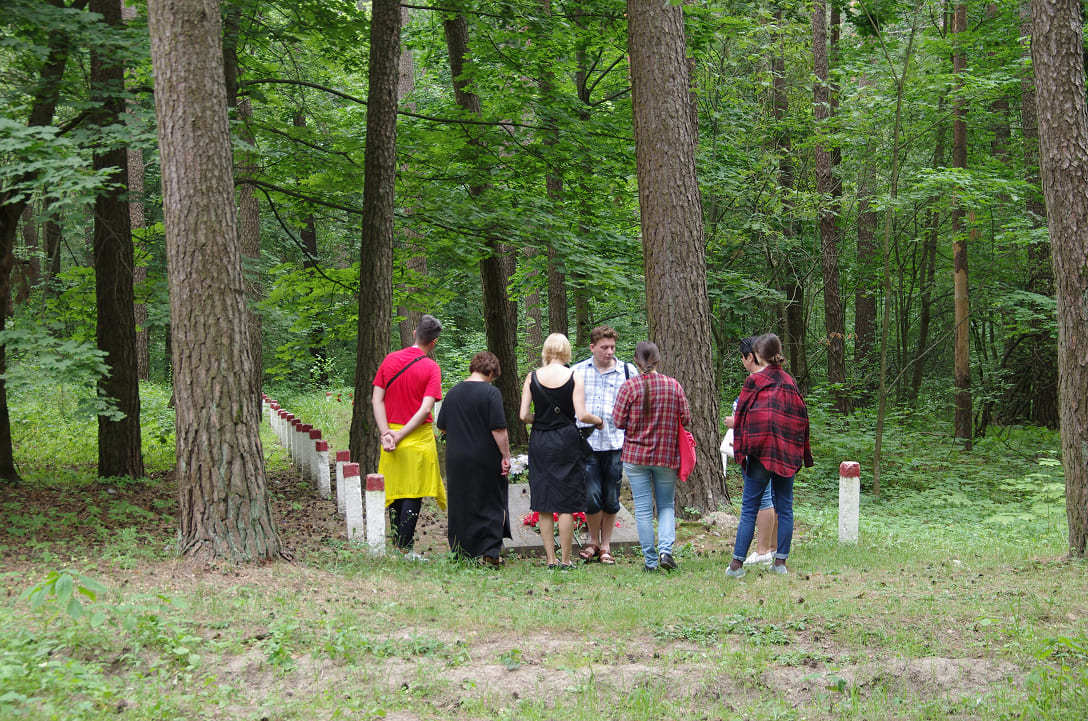
In the photo: Folklore researchers at work (courtesy of Ekaterina Zakrevskaya).
The research was carried out with the financial support of A. Klyachin.
Work on the project has been completed.