Scholarship for PhD Students — Nikita Agranovsky
Project "Literary and Artistic Material of Joseph Pennell's Book "The Jew at Home": New Contexts and a Reassessment of Appraisals" by Nikita Agranovsky, PhD student at the European University at St. Petersburg. An article has been published: Н. Аграновский. Евреи Восточной Европы глазами американского художника: реконтекстуализация книги Джозефа Пеннелла «The Jew at Home». Архив еврейской истории. Т. 14. 2024.
Joseph Pennell (1857–1926) is a central figure in the history of American graphic arts at the turn of the 20th century. As an illustrator, he worked in Europe for three decades, was a pupil of James McNeill Whistler, and upon returning to the USA became one of the first artists to shape a new poetics of the grandiose in depicting American industry. For his contemporaries, Pennell was also a popular writer. The most problematic among his works is the book The Jew at Home, published in 1892 in London and New York with the author's illustrations.
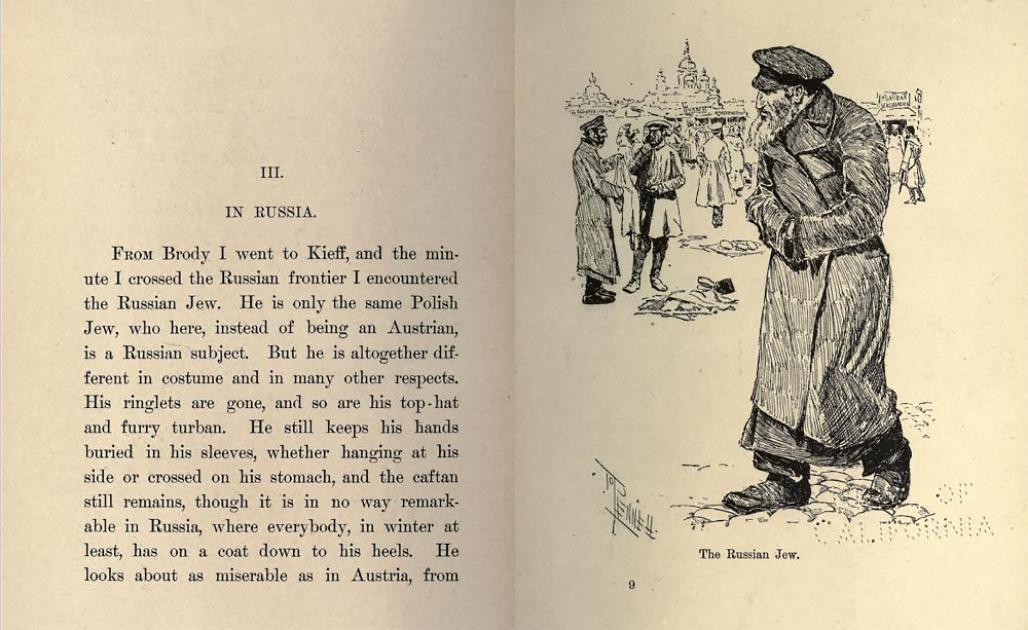
This book is a travelogue — a description of Pennell's impressions from a journey through Eastern Europe (Hungarian Transcarpathia, Austrian Galicia, and the Russian Western Krai) as the natural "habitat" of Jews, and its illustrations, according to art historians, represent the first treatment of Jewish subject matter in American art.
These illustrations, however, have never been the object of separate study, and the book as a whole has been perceived as a collection of antisemitic stereotypes. Meanwhile, Pennell's work exhibits acute ethnographic observation, which paved the way for the further representation of Eastern European Jews in graphic art and photography. The aim of this research was to revise the superficial appraisals of Pennell's illustrations through their recontextualization. These images were examined in light of the "Jewish Question" in the USA at the end of the 19th century, within the context of tourist travelogue traditions, as well as American art itself and the largely understudied Russian-American artistic contacts at the turn of the century.
Image source: University of California Library.
The research was carried out with the financial support of A. Klyachin.
The work on the project is completed.